The Ultimate Guide to Real Estate Due Diligence: The Title-First Approach
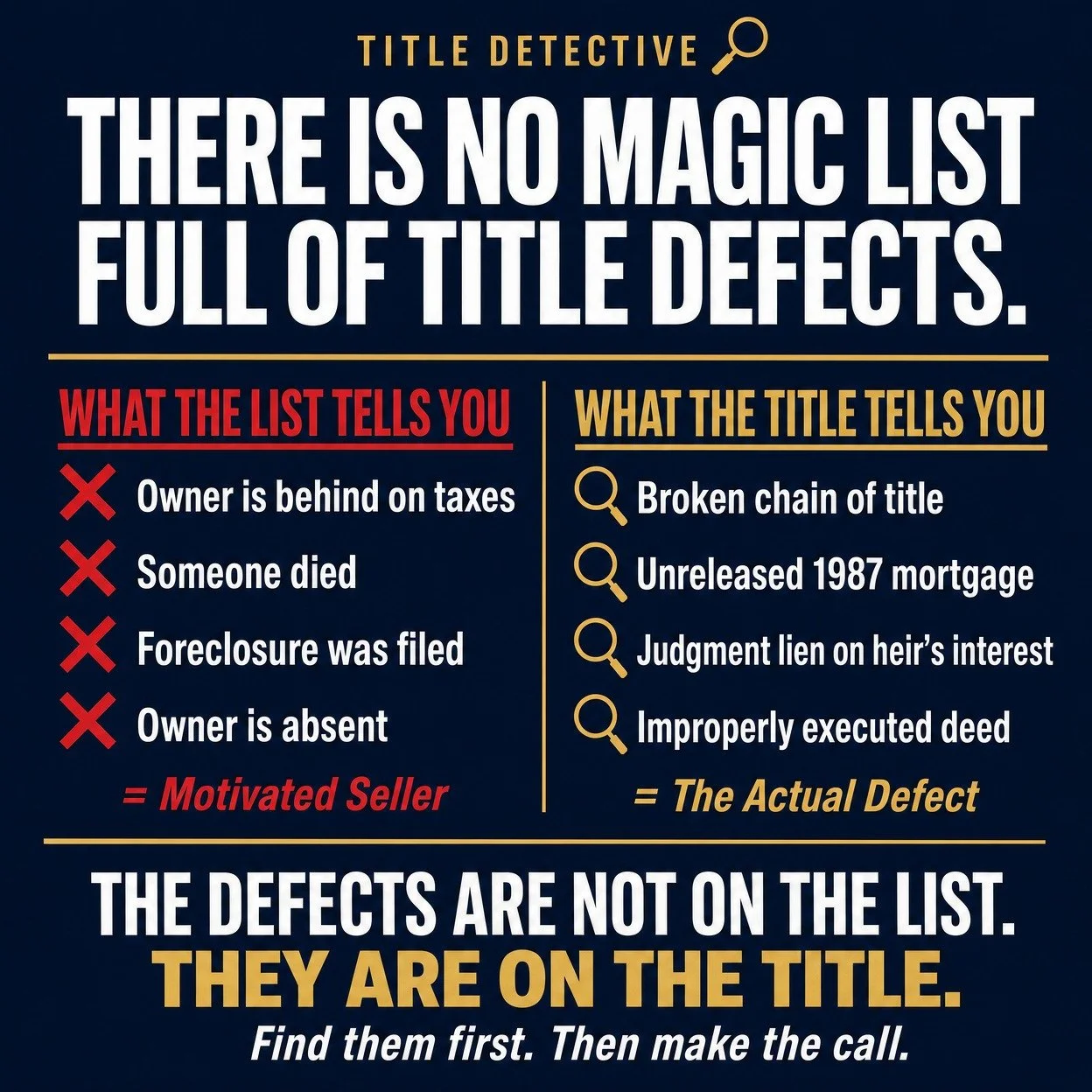
Every investor has a due diligence checklist. It usually involves running comps, estimating repairs, and calculating cash flow. But if your checklist doesn’t start with title, it’s incomplete.
This is the ultimate guide to a better due diligence process—one that puts title first.
The Title-First Due Diligence Checklist:
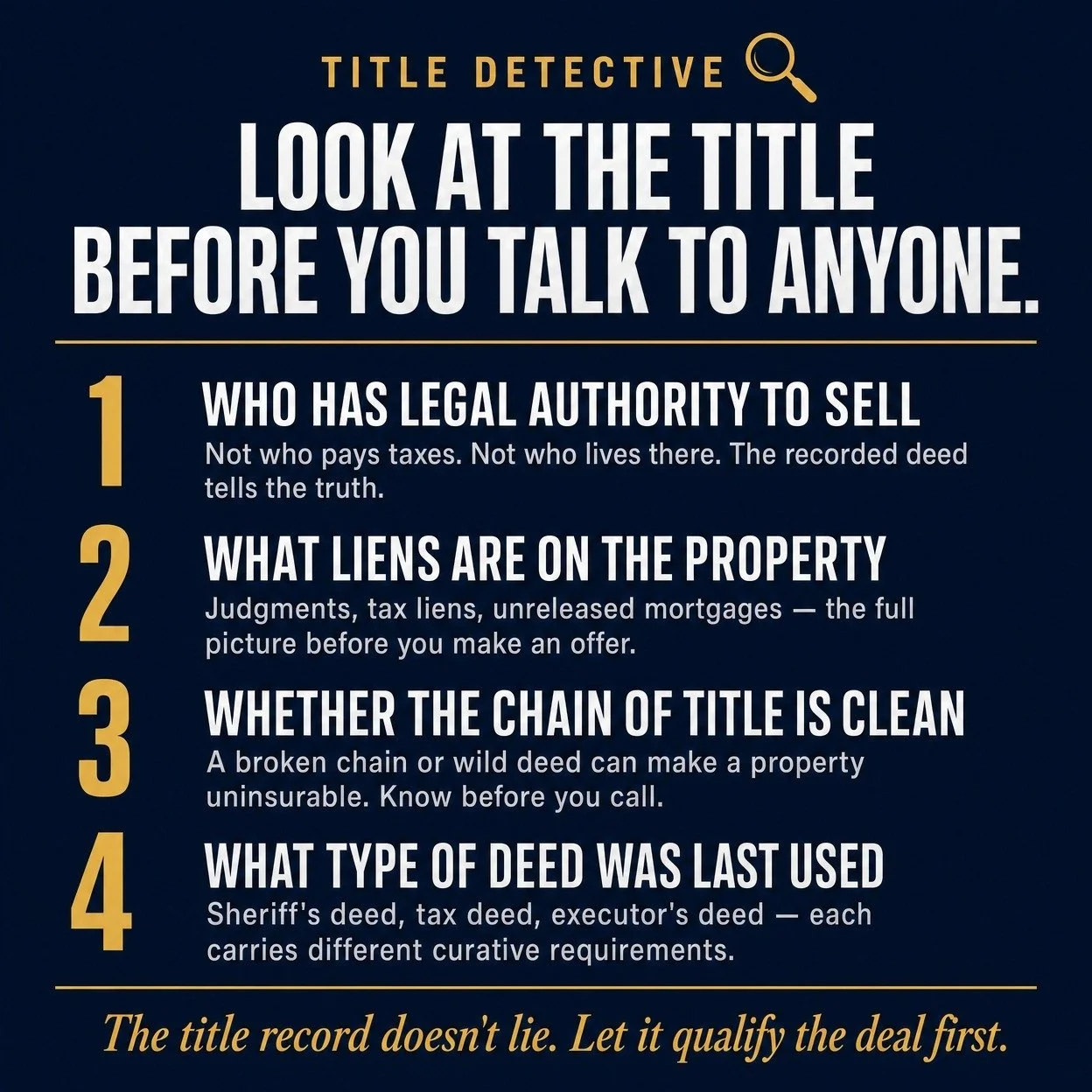
Verify Ownership: Who is on the last recorded deed? Does it match the person you’re talking to?
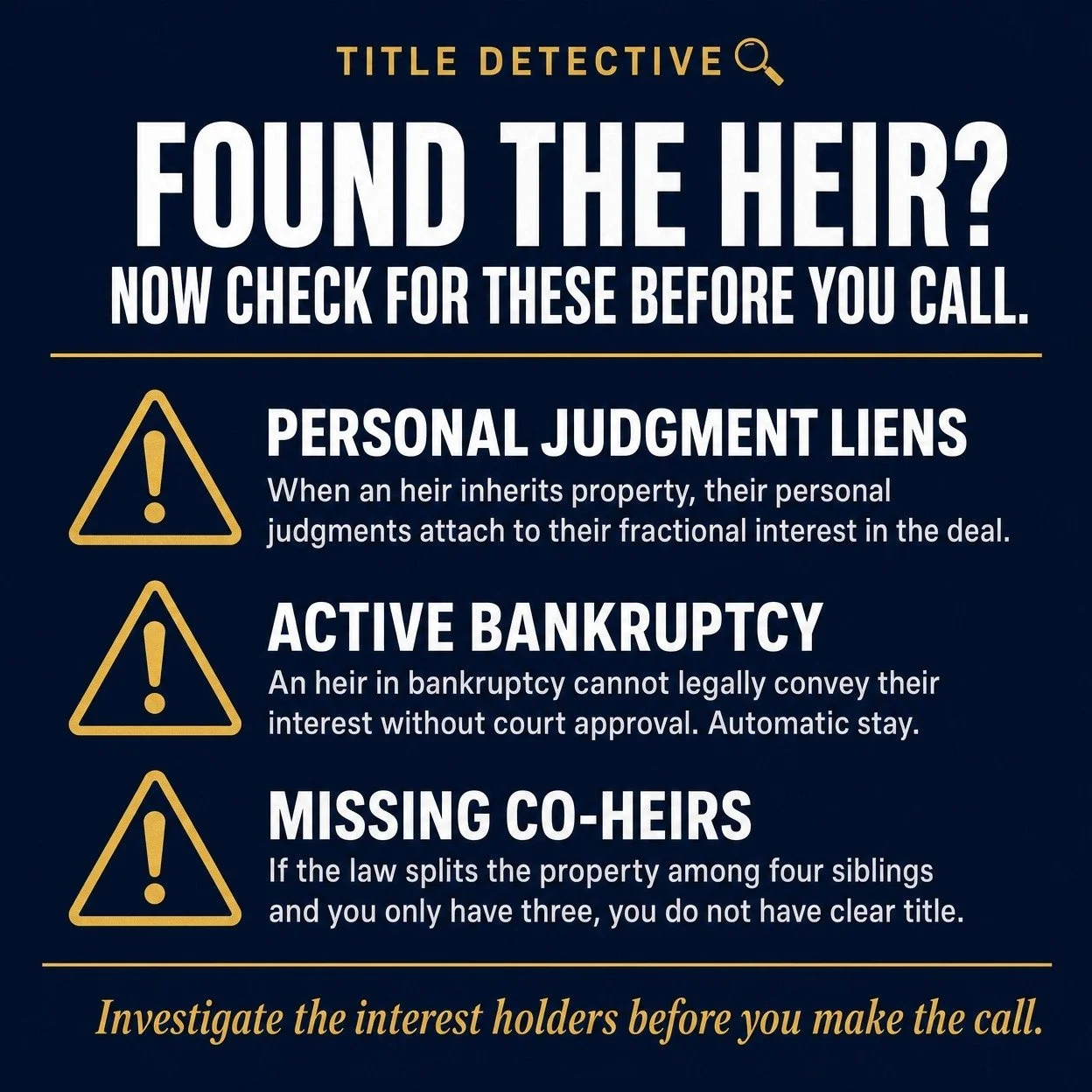
Check for Liens & Mortgages: Are there active mortgages, judgments, or tax liens against the property or the owner?
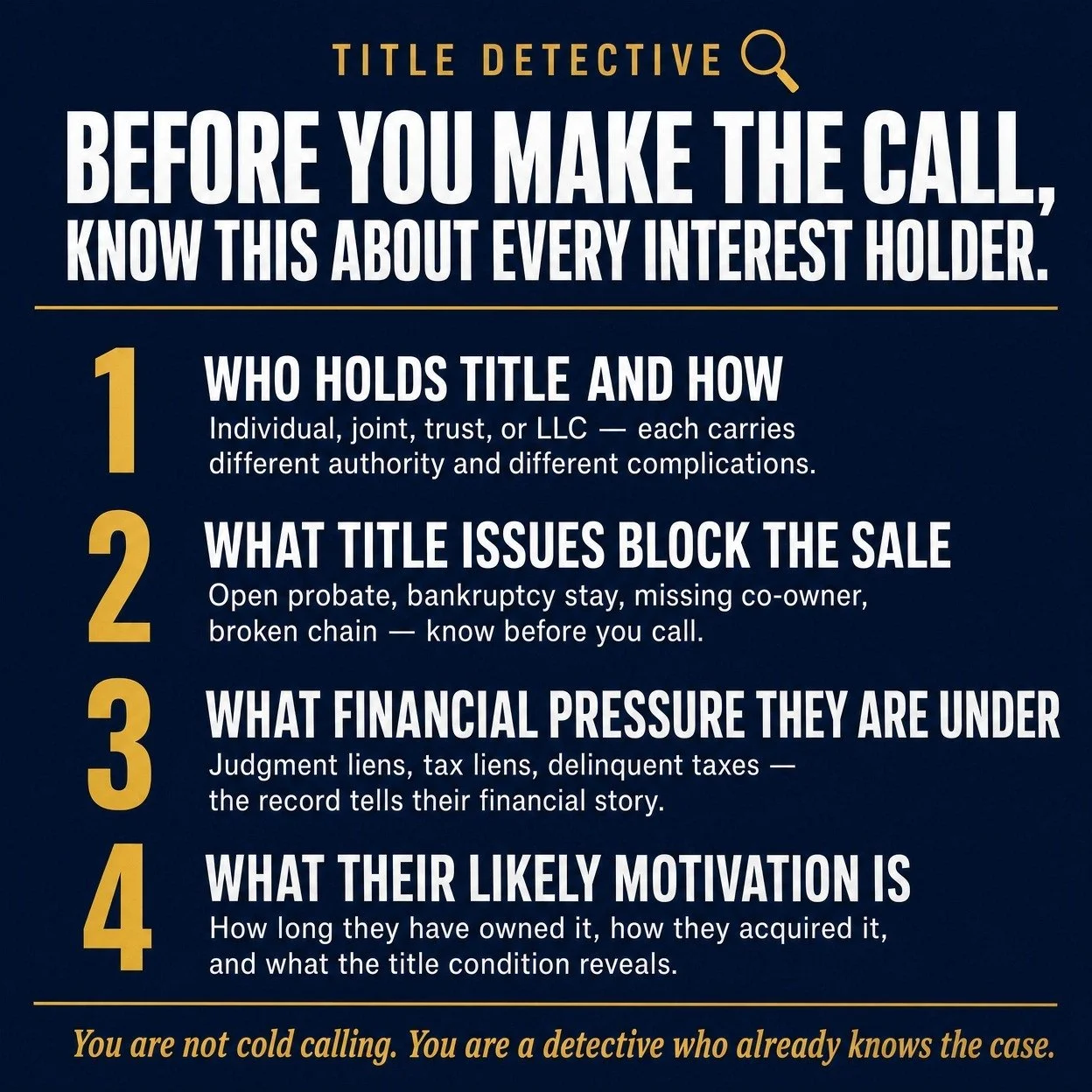
Analyze the Seller’s Story: Use the financial data (loan amounts, purchase date) to understand the seller’s situation. Is there equity? Are they in distress?
Review the Legal Description: Does the property described legally match what you see on the ground? Are there any easements or encroachments?
Assess Deal Viability: Based on the title, is this deal straightforward, complex, or a non-starter?
Only after you’ve completed this initial title investigation should you move on to the traditional financial analysis. This process saves you countless hours by weeding out the dead-end deals from the start.
This checklist is just the beginning. For a complete, in-depth system with sample documents, case studies, and advanced strategies, you need The Title Detective’s Playbook. It’s the most comprehensive guide to real estate due diligence ever written. [Buy your copy now and make every deal a sure thing.]