
The Authoritative Edge: Why Licensed Brokers and Title Intelligence Elevate Broker's Price Opinions
In the dynamic landscape of real estate, accurate property valuation is paramount. While appraisals serve as the gold standard for many transactions, Broker's Price Opinions (BPOs) offer a flexible, cost-effective alternative, particularly in situations demanding speed and broker-level market insight. However, the true authority and utility of a BPO are intrinsically linked to the qualifications of its creator and the depth of its underlying research, especially when integrated with comprehensive title intelligence.
The Indispensable Role of the Licensed Real Estate Broker
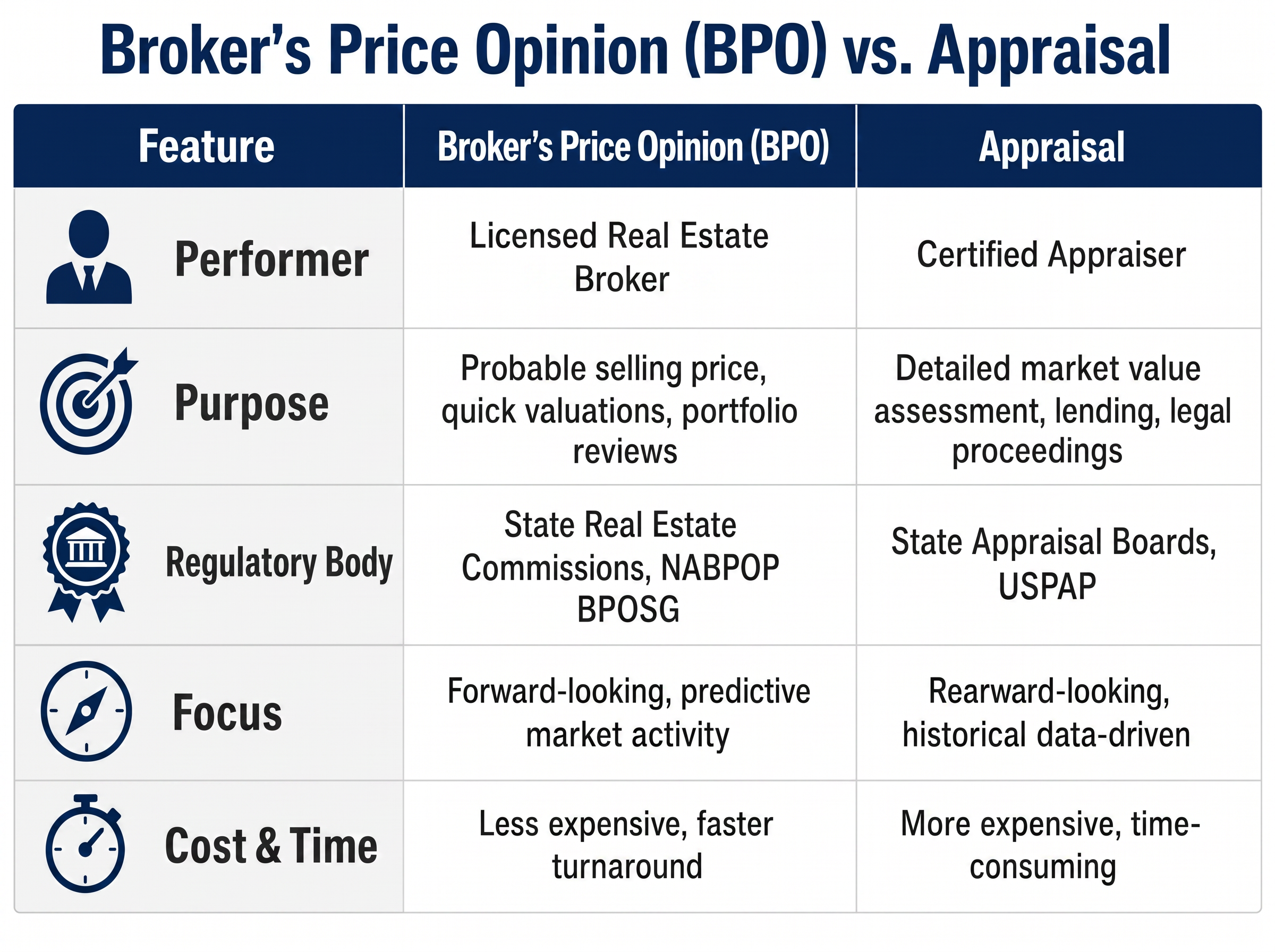
A Broker's Price Opinion, by its very definition, is an estimate of a property's probable selling price, prepared by a licensed real estate broker. This requirement is not arbitrary; it stems from the unique position and expertise that licensed real estate professionals hold within the market:
Market Expertise: Licensed brokers are immersed in local real estate markets daily. They possess firsthand knowledge of current trends, neighborhood nuances, buyer demand, and recent comparable sales that may not yet be reflected in public records or accessible to appraisers .
Transactional Experience: Unlike appraisers who primarily assess historical data, brokers are actively involved in the negotiation and sale of properties. This grants them a forward-looking perspective, understanding what buyers are willing to pay and what sellers are willing to accept in the current market .
Ethical and Regulatory Framework: Real estate licensees operate under state-specific licensing laws and ethical guidelines. These regulations ensure a level of professionalism, accountability, and adherence to standards in their valuation activities, including BPOs.
Legal Authority and State-Specific Regulations: The Foundation of a Broker's Price Opinion
The authority for a licensed real estate broker to perform a BPO is primarily derived from state real estate licensing laws and regulations. These statutes explicitly grant brokers the right to provide opinions of value within the ordinary course of their business, distinct from the more stringent requirements for certified appraisals. For instance, in states like California, a BPO must be conducted by a licensed broker as part of their regular business activities. Similarly, Florida mandates that brokers performing BPOs maintain their licenses in good standing and adhere to the Florida Real Estate Commission's (FREC) regulations.
This legal framework, coupled with the broker's daily immersion in local market dynamics, forms the bedrock of their authority. While BPOs are not formal appraisals governed by the Uniform Standards of Professional Appraisal Practice (USPAP), the National Association of BPO Professionals (NABPOP) provides comprehensive Broker Price Opinion Standards and Guidelines (BPOSG). These guidelines establish a framework for ethical conduct, competency, and best practices, ensuring a consistent and professional approach to BPO preparation, even where state laws may be less prescriptive. The BPOSG emphasizes that its standards are "absolute and must be adhered to without exception," reinforcing the commitment to quality and reliability in BPO practice.
The Enhanced Authority of a Title-Based Broker's Price Opinion: Beyond Market Comparables
While a traditional BPO primarily relies on comparable sales and current market conditions, a title-based BPO elevates this analysis by integrating a critical layer of Legal Intelligence through a thorough examination of the property's title history. This approach significantly enhances the authority and reliability of the valuation, particularly for investors, lenders, and legal professionals navigating distressed properties, complex transactions, or judicial proceedings.
By proactively investigating the title, a broker can uncover potential clouds on title, undisclosed liens, critical encumbrances, and fundamental ownership issues that could drastically impact a property's marketability, financeability, and ultimately, its actual value. This comprehensive approach aligns with The Title Detective Mindset, which prioritizes verifying ownership, legal authority, and potential defects before any financial underwriting. This methodology prevents wasted time and resources on deals that are legally unfeasible or carry unforeseen liabilities.
Crucially, to perform a truly authoritative title-based BPO, the broker must possess significant, verified experience dealing with and resolving complex title issues. This is not merely about identifying problems but understanding their practical implications and potential solutions. Furthermore, holding a title examiner license or equivalent certification is paramount, as it provides the specialized legal knowledge and authority to interpret intricate title documents and present these findings with the utmost good faith and credibility to any person reviewing the report. This specialized expertise ensures that the BPO's conclusions are not just market-driven but also legally sound and practically actionable.
Additional Criteria for a Title-Based BPO:
Beyond the standard market analysis, a title-based BPO incorporates specific criteria to provide a more robust and legally informed valuation:
Unbroken Chain of Title Verification: Ensuring a clear and continuous record of ownership transfers, identifying any missing links or irregularities that could challenge legal ownership.
Lien Priority Analysis: A detailed assessment of all recorded liens (e.g., mortgages, judgments, tax liens, HOA liens) to determine their legal precedence and potential impact on the property's equity and market value. This includes understanding "super-priority" liens like property taxes that can supersede even first mortgages.
Legal Authority of Grantor Confirmation: Verifying that the current owner(s) or their representatives (e.g., trustees, executors, LLC managers) possess the undisputed legal right to convey the property. This involves reviewing trust documents, probate orders, corporate resolutions, or powers of attorney.
Impact of Encumbrances and Restrictions: Analyzing how easements, restrictive covenants, or other recorded encumbrances affect the property's use, development potential, and market appeal. For example, an unreleased utility easement might restrict future construction, thereby reducing value.
Identification of Title Defects: Proactively identifying issues such as wild deeds, forged signatures, improper notarizations, or unresolved probate matters that could render a title uninsurable or subject to legal challenge.
These additional layers of due diligence transform the BPO from a market snapshot into a comprehensive legal and financial risk assessment, providing a far more accurate and defensible opinion of value.
Documentation: The Cornerstone of an Authoritative Title-Based BPO
The authority of a title-based BPO is not merely in the broker's opinion but in the robust documentation that supports it. This documentation provides a clear, defensible basis for the valuation, highlighting both the market value and any factors that might adjust that value due to title issues. Key documentation includes:
Chain of Title Analysis: A detailed review of the property's ownership history, tracing transfers back to a statutory period or original owner. This identifies any breaks, gaps, or irregularities that could cloud title. Documents include recorded deeds (warranty, quitclaim, special purpose) and their proper execution and notarization.
Lien and Encumbrance Searches: Comprehensive searches for all recorded liens (mortgage, judgment, tax, mechanic's, HOA) and encumbrances (easements, covenants, restrictions). The BPO should document the type, amount, recording date, and priority of each, as these directly affect the property's net value and market appeal.
Vesting and Authority Verification: Examination of the current deed to confirm how title is held (vesting) and to verify that the party intending to sell has the legal authority to do so. This is critical in cases involving trusts, LLCs, probate, or divorce, where proper authorization documents (e.g., trust agreements, operating agreements, probate orders) must be in place.
Legal Description Verification: Confirmation that the property's legal description is accurate and consistent across all relevant documents, preventing issues like wild deeds or boundary disputes.
Public Records Review: Beyond recorded documents, a title-based BPO may incorporate findings from assessor's records, tax records, and court records (e.g., for probate, bankruptcy, or divorce proceedings) to provide a holistic view of the property's legal standing and any associated financial pressures.
By meticulously documenting these title-related findings, a title-based BPO transcends a mere market estimate. It becomes a powerful tool that not only provides a probable selling price but also identifies and quantifies the impact of legal and financial encumbrances, offering a more realistic and actionable valuation for informed decision-making.
The "Good Faith" Advantage: Why Title Intelligence Builds Trust
For judges, lenders, investors, and other stakeholders, the inclusion of comprehensive title intelligence in a BPO report significantly enhances its credibility and establishes a foundation of "good faith" in the final valuation. This trust is built upon several key factors:
Comprehensive Risk Disclosure: A title-based BPO demonstrates that the broker has not merely estimated a market price but has also diligently investigated and disclosed all known legal and financial risks associated with the property. This transparency is crucial for any party relying on the valuation for critical decisions, especially in legal contexts where due diligence is paramount .
Alignment with Legal Realities: The valuation presented in a title-based BPO is grounded in the property's actual legal status, not just its physical characteristics or market comparables. A judge, for instance, is far more likely to accept a valuation that accounts for a significant unreleased mortgage, a complex probate situation, or a restrictive easement, as it reflects the true encumbered value of the asset . Ignoring such critical title defects, or failing to accurately assess their impact on marketability, could lead to a valuation being deemed unreliable or even lacking in good faith. Title issues directly impact marketability by:
Restricting Buyer Pool: Many buyers, especially those requiring financing, will be deterred by properties with clouded titles, significantly shrinking the potential market.
Increasing Transaction Costs: Resolving title defects often involves legal fees, quiet title actions, or the purchase of expensive title insurance riders, all of which reduce the net proceeds for the seller and increase the overall cost for the buyer.
Extending Closing Timelines: Complex title issues can delay or even derail transactions, leading to lost opportunities and increased carrying costs for all parties.
Reducing Property Value: The uncertainty and cost associated with resolving title defects inherently diminish a property's perceived and actual market value, often leading to discounted sales prices.
By explicitly addressing these impacts, a title-based BPO provides a realistic valuation that accounts for the full spectrum of challenges a property may present.
Demonstrated Competency and Diligence: By performing a detailed title examination, backed by verified experience in resolving title issues and holding a title examiner license, the broker showcases an unparalleled level of competency and professional diligence. This proactive approach, adhering to both market valuation principles and the investigative rigor of title analysis, signals to all parties—especially judges and legal professionals—that the valuation is thorough, legally sound, and well-researched, minimizing the potential for unforeseen liabilities . The specialized knowledge of a licensed title examiner ensures that the interpretation of complex legal documents is accurate and reliable, lending significant weight to the BPO's findings.
Defensibility in Disputes: In cases of litigation, bankruptcy, or foreclosure, a title-based BPO provides a robust, documented basis for the property's value. The detailed records of liens, ownership, and encumbrances offer clear evidence to support the valuation, making it more defensible against challenges and contributing to a fair and equitable resolution.
In essence, the additional knowledge sets derived from title intelligence provide a holistic view of the property, moving beyond superficial market data to reveal its true underlying value and any inherent challenges. This depth of analysis fosters confidence and ensures that the BPO serves as a reliable, good-faith estimate in even the most scrutinizing environments.
Conclusion
Broker's Price Opinions, when performed by licensed real estate brokers, leverage invaluable market expertise to provide timely and relevant property valuations. When augmented with a thorough examination of the property's title, these title-based BPOs gain an unparalleled level of authority. They transform from simple market estimates into comprehensive intelligence reports, revealing both the market potential and any hidden legal or financial challenges. For anyone navigating the complexities of real estate, understanding and utilizing the authoritative documentation within a title-informed BPO is not just beneficial; it's essential for mitigating risk and maximizing opportunity.